Diesel engine repairs and daily maintenance are carried out to keep the ship in a good technical and seaworthy state. Let’s share with you the things about ship maintenance.
In terms of the definition of ship’s daily maintenance, the ship’s daily maintenance refers to the maintenance of the ship in a good technical and seaworthy state during the interval between the ship’s second planned visit to the factory for repairs. The daily maintenance or troubleshooting of the ship and various equipment by technicians to maintain the daily state of the ship.
The following principles should be followed in daily maintenance:
1. Safety one. Focus on prevention, pay equal attention to self-cultivation, and adhere to the principle of diligence and thrift. 2. The principle of combining daily maintenance with suspension inspection. 3. The department should do a good job of supervision and implement the principle of inspection and maintenance.
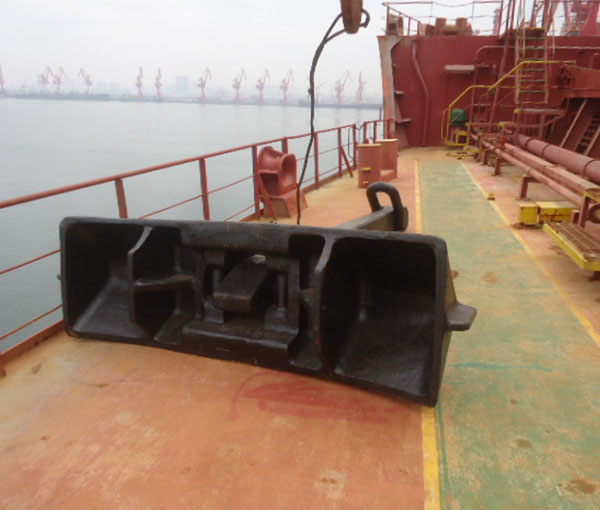
The daily maintenance work is also classified. It is mainly divided into three types: daily maintenance, monthly maintenance and suspension maintenance. Among them, suspension maintenance is divided into two types: semi-annual maintenance and annual maintenance. The daily maintenance is carried out every day, the monthly maintenance is carried out once a month, the semi-annual inspection is carried out for 500-600 hours of operation of the main engine or once every six months, and each inspection is carried out for 3-5 days. As for the annual inspection, the main engine is operated for 1000-1500 hours. Or once a year, 3-7 days each time
Ships started from prehistoric wooden boats and experienced the era of canoes and wooden boats. After a steel boat in the world came out in 1879, the era of steel boats began again. The propulsion of ships has also evolved from relying on manpower, animal power and wind power (that is, pitching, paddling, swaying, stringing and sailing) in the 19th century to the use of machinery.
In 1807, Fulton in the United States built a paddle-wheel-propelled steam engine ship "Clermont" at a speed of about 8 km/h; in 1839, a steam engine ship equipped with propellers, "Aki The "Mead" came out with a main engine power of 58.8 kilowatts. This kind of propeller fully demonstrated its superiority, so it was quickly promoted.
In 1868, the Chinese steamship "Huiji" with a load of 600 tons and a power of 288 kilowatts was successfully built. In 1894, British Parsons used his invented reactionary steam turbine as the main engine, which was installed on the "Turbine" and successfully sailed on the Thames with a speed of more than 60 kilometers.
The steam turbine and propeller of the early steam turbine ship were at the same speed. About 191 [2] 0 years later, gear reduction, electric transmission reduction and hydraulic transmission reduction devices appeared. After this, ship steam turbines began to adopt the reduction transmission method


: failed to open stream: Permission denied in /home/pcshiprepairxp0ccszhpigper7ecpnaiizr/wwwroot/en/source/core/class.mysqli.php on line 63
http://www.pc-shiprepair.com/en/data/upload/202103/20210301102113_298.jpg)
: failed to open stream: Permission denied in /home/pcshiprepairxp0ccszhpigper7ecpnaiizr/wwwroot/en/source/core/class.mysqli.php on line 63
http://www.pc-shiprepair.com/en/data/upload/202102/20210226084008_962.png)